
$12.50
Add to Cart
Shagbark Hickory, Carya ovata Seeds (Edible, Fall Color, Hardy, Shade)
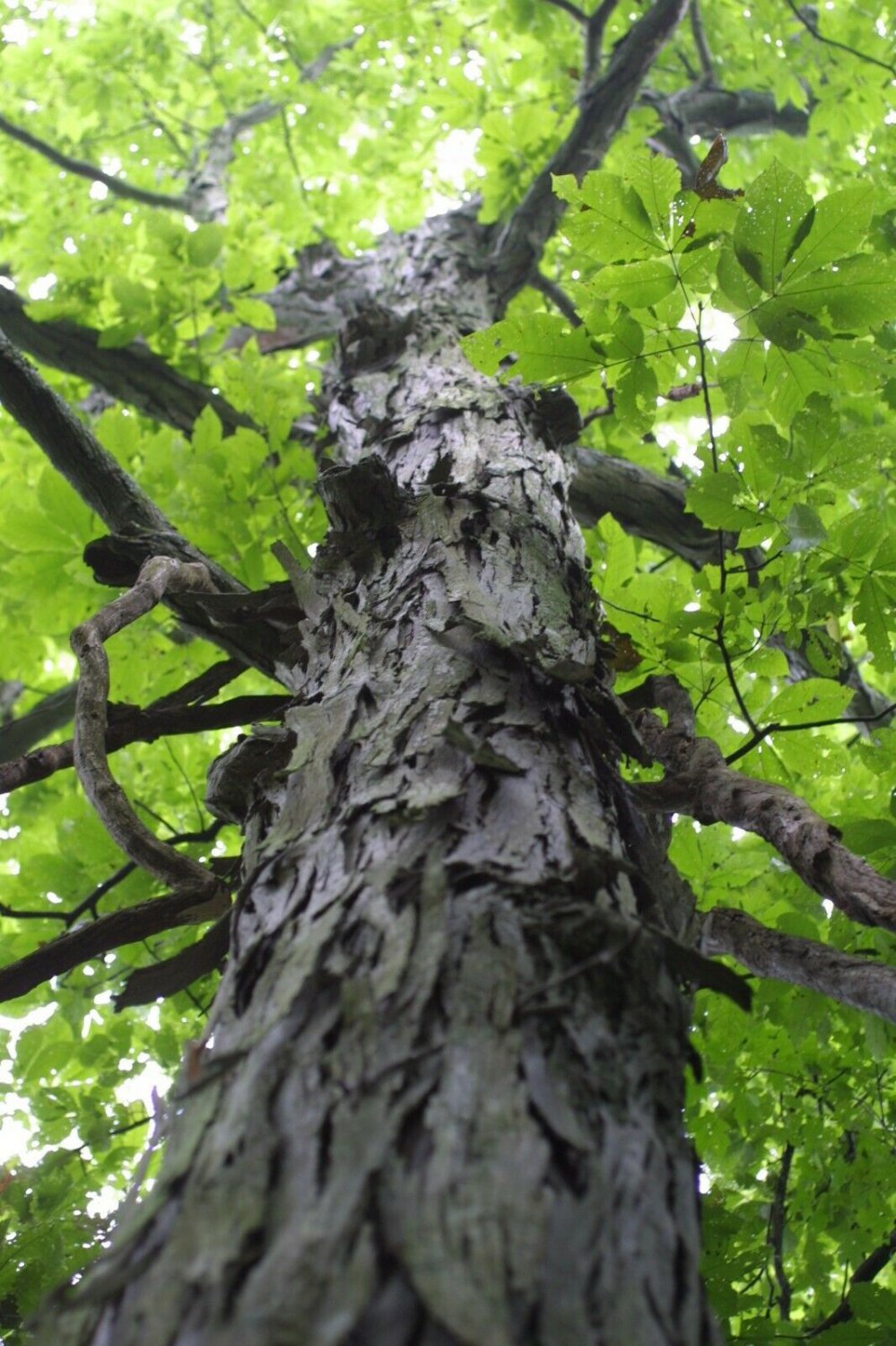


This is a "Multiple Variation" style listing. Use the "Seed Qty" drop-down menu, above, to select quantity/weight.Choose from:4 Seeds for $3.008 Seeds for $5.00 Shagbark Hickory, Carya ovata, Tree Seeds Hardy, Adaptable, Edible Nuts, Fall Colors, Wildlife Food/Shelter, Long Lived, Shade Tree, Exfoliating Bark, Cold and Drought Tolerant Shagbark Hickory is a large long lived deciduous tree that typically grows 70 to 90 feet tall and 50 to 70 feet wide. Trunks mature to 2 to 3 feet in diameter. The Shagbark Hickory features a distinctive, shag covered bark, which is easily discernible on the taller, straight trees, and such is where it gets its name from. The tree has a picturesque, oval-rounded outline with the lower branches somewhat drooping, the upper branches upright, and the middle branches just about horizontal. Shagbark Hickory is probably the best ornamental hickory due to the open branching habit and shaggy gray bark. It grows well in both wet and dry locations. It is native from Quebec to Minnesota south to Georgia and Texas. Next to the Pecan (Carya illinoinensis), Shagbark Hickory is the most widespread, most important, and easiest to identify of the hickories. It has the best tasting hickory nuts, too. The deliciously sweet and fragrant kernels are enclosed in thin-shelled, light tan nuts that are a little longer than broad and rather flattened. The nuts are themselves enclosed in spherical husks, about 2 inches long and dark yellowish or reddish brown at maturity. In September and October the husks split open in four sections, exposing the ripe oily nuts. They are eaten by a wide range of wildlife species, including ducks, quail, wild turkeys, squirrels, chipmunks, deer, foxes, raccoons, and mice. Shagbark Hickory grows faster than other hickories, but it still takes some 40 years to reach commercial seed-bearing age. Best production is from trees 60 to 200 years old. Crops tend to be heaviest every 2 or 3 years, with lighter crops in the years between. A healthy mature shagbark can produce 2 to 3 bushels of shelled nuts in the good years. The nuts of the hickory were a staple for many North American Indian tribes. They mashed the nuts with water and then used the "hickory milk" to make breads and cakes, and to serve like butter on vegetables. Sugar and syrup can be made from the sap, as with sugar maple. The wood is so heavy and dense that it has nearly as much heating capacity as soft coal. It is used for smoking hams, bacon, sausage and other meats and for making high quality charcoal, as well as for furniture, tool handles, baseball bats, and (formerly) wagon wheels. Andrew Jackson, 7th president of the U. S., was affectionately known as Old Hickory in recognition of his tough character. Leaf: Deciduous smooth, medium yellow-green odd-pinnate (feather-like) compound leaves, with each leaf having 5 to 9 pointed leaflets. Leaflets range from 8 to 14 inches long. Leaves turn a showy yellow to golden brown in fall.Flower: Monoecious (separate male and female flowers on the same plant). Male flowers in hanging pendulous, yellow-green catkins, often in pairs of three (3 to 5 inches long); females are small and yellowish green, 4-angled short spikes. Flowers appear in April-May when the leaves unfold and are pollinated by the wind.Fruit: Female flowers give way to sweet, edible nuts that are nearly round, thin shelled and 1 1/2 to 2 inches long. Each nut (technically a drupe) is encased in a green husk which splits open in four sections when ripe in fall. The husks often persist on the tree for weeks after the nut has fallen. It normally takes 8-15 years for a young tree to bear a nut crop. The nuts are attractive to a variety of wildlife. Twig: Stout and usually tomentose, but may be somewhat pubescent near terminal bud, numerous lighter lenticels; leaf scars are raised, 3-lobed to semicircular - best described as a "monkey face"; terminal bud is large, brown, and pubescent, covered with 3 to 4 brown scales, more elongated than other hickories. Bark: At first smooth and gray, later broken into long, wide plates attached at the middle, exfoliating in long strips away from the trunk resulting in a coarsely shaggy appearance. Form: A large tree (can reach heights well over 120 feet) with a straight trunk and an open round to oblong crown. Common Names: Scalybark Hickory, Carya alba, Hickoria ovata, Southern Shag bark HickoryZone: 4 to 8Growth Rate: ModeratePlant Type: Large, long lived deciduous treeFamily: Juglandaceae (Walnut family)Native Range: Eastern United States Height: 70 to 90 feet Spread: 50 to 70 feet Shape: Large oval to irregular rounded spreading crown.Bloom Time: April-MayBloom Color: Yellowish-greenFlower/Fruit: Sweet Edible Rounded NutSun: Full sunFall Color: Showy Yellow to Golden.Drought Tolerance: ModerateWater: Medium Maintenance: MediumSite Requirements/ Soil Tolerances: Best grown in humusy, rich, moist, well-drained soils in full sun. Established trees can tolerate normal droughts. They may drop their nuts in extremely dry years.Culture: Difficult to transplant because of its deep taproot. Nut production can be sparse in the northern part of its growing range, particularly when spring is late and summer is cool. Cross-pollination generally produces a more abundant crop of better quality nuts.Uses: Lawn tree, campuses, golf courses, street tree. A tall ornamental shade tree for large properties. May also be grown for nut production. Sowing Carya ovata Seeds:For best results, please follow the instructions in the order provided.Scarify: Soak in water for 1-4 days (Change water regularly)Stratify: Cold 90-120 days, 40 Degrees F in a Moist Medium.Germination: Sow 1” to 2” DeepFor more information about seed pretreatment and growing trees and shrubs from seed, please download this .pdf:https://www.forestresearch.gov.uk/documents/1449/fcpg018.pdf Germination:Seeds Packets are labeled with seed name and sowing details.Seeds have not been pretreated unless specified in the listing.Seed is not a specific Cultivar (Variety) unless specified in the listing.Due to the many factors involved in successful germination, Seller cannot be responsible for buyers growing methods or mistakes.I have provided what I believe to be a good overview on this page (which you are free to print for further reference), however, it is still recommended to check specialist literature for more details and practices specific to your climate and soil conditions to avoid mistakes in the germination and growing process. Shipping and Discounts:All items are set up to automatically discount as follows:1. Any promotional offers are discounted by using the "Add to Cart "only.2. To qualify for any discounts, items must be paid together, on the same eCRATER invoice.3. If paid separately, no discounts will be applied though seller reserves the right to ship together.4. If there are any questions or concerns about the amount due, please message me before paying so I can address all of your concerns before there is a problem. 5. Buyer assumes responsibility once payment has been made. International Buyer’s:It is the buyer’s responsibility to know their countries customs laws.Plant and plant materials including seeds may be restricted from importing to your country. Please check with your customs agency and or post office before purchasing. Upon purchasing this item Buyer accepts the risk of item being confiscated and/or destroyed by customs and Seller will not be held liable for this.If you are on my exclusion list it is because: “Plant and plant materials including seeds” are restricted from importing to your country, it is enforced by your country and there is a high rate of customs checking for this.Import duties, taxes, and customs charges are not included in the item price or shipping cost. These charges are the buyer's responsibility. Please check with your country's customs office to determine what these additional costs will be prior to buying.Tracking is not available for International items. International mail varies from 10 to 30 business days (postal working days) and some countries require certain International items to be picked up at your post office. Upon processing your order, you will be sent a customs number, your shipping date and your shipping address, which you will need in order to retrieve it from your post office if you are required to do so. If these are not picked up in a reasonable time they may be returned or discarded.


 ID, Jawa Tengah